What to Look for in a Secure Storage Unit
What to Look for in a Secure Storage Unit
Safe Storage NV
May 19th, 2026
Here is something the storage industry does not advertise: a facility with a freshly painted fence, a clean website, and a competitive monthly rate can have virtually no real security infrastructure behind it. One shared gate code that has not changed in three years. A couple of cameras are mounted on poles, with no one monitoring or reviewing the footage. Drive aisles that go completely dark after 7 pm. Nothing about the rental listing told you any of that, and nothing on the tour would have either unless you knew what to look for.Most renters find out about security gaps the wrong way. They return to the facility one afternoon and notice a broken lock, a forced door, or belongings missing from a unit they trusted to be safe. At that point, the questions they should have asked before signing become painfully obvious.This guide exists so you can ask those questions first. It covers every security feature worth evaluating when you compare storage facilities, the specific questions to put to any operator before you commit, the unit-level details that are entirely the renter's responsibility, and what a genuinely secure facility looks like in practice. Whether you are storing furniture between homes, parking an RV for the winter, or moving business inventory off-site, the facility you choose will either give you peace of mind or take it away. Knowing the difference before you sign is the entire point.
Why Storage Security Deserves More Attention Than Most Renters Give It
The self-storage industry has grown significantly over the past two decades, and the range of quality across facilities has grown with it. Some facilities operate with professional-grade security infrastructure. Others rely on a single gate code shared across hundreds of tenants and a handful of cameras that may or may not be recording anything useful.Renters who approach the decision based on price alone tend to discover the gaps in a facility's security only after they need to file a claim. At that point, understanding what was and was not in place matters a great deal for insurance purposes, law enforcement reporting, and any recovery effort. The time to understand a facility's security posture is before you hand them a rental agreement, not after you find a broken lock on your unit door.According to the U.S. Fire Administration, storage facilities present unique fire and safety risk profiles that extend beyond theft alone. Understanding the full range of physical risks at a storage property, including fire hazards, inadequate lighting, and uncontrolled access, should factor into any serious evaluation of where to rent.The good news is that evaluating a facility's security does not require specialized knowledge. It requires knowing which features to look for and which questions to ask. The rest of this guide covers both.
The Core Security Features Every Reputable Storage Facility Should Have
Before you visit a facility, build a mental checklist of the features that separate a genuinely secure operation from one that only looks the part. These are not premium add-ons reserved for expensive facilities. They are baseline standards that any reputable storage operator should be able to confirm and show you in person.
Gated Access with Individual Credentials
A gate that swings open for anyone who knows a four-digit code offers very limited protection. What you are looking for is a gated access system tied to individual renter credentials, meaning each tenant has a unique code, key fob, or access card that is linked to their account and can be deactivated if their rental ends or their credentials are compromised.Individual access credentials create accountability. When access to the property is tied to specific accounts, the facility can generate an entry and exit log that shows exactly who was on the property and when. That log is useful for theft investigations, dispute resolution, and general operational accountability in a way that a shared gate code never can be.Ask the facility directly: Does every tenant have a unique access credential, and does the system log entry and exit times? A facility that cannot answer that question clearly is telling you something important about how seriously they take access control.
Surveillance Cameras with Real Coverage
Cameras are one of the most visible security features at any storage facility, and they are also one of the easiest to misrepresent. A camera mounted on a post in the parking lot may or may not be recording. It may or may not have sufficient resolution to identify a person or a vehicle. It may or may not have its footage stored somewhere useful if you ever need to retrieve it.What you want to see is a camera system with coverage across the full property. That means cameras at the entry and exit gate, along the drive aisles between unit rows, at any outdoor vehicle or RV storage areas, and at the perimeter of the property. The goal is to eliminate blind spots, because a thief looking for an opportunity will go directly to the area of the property that the cameras do not cover.When you visit a facility, look for cameras yourself. Note how many there are, where they are positioned, and whether they appear to be operational. Then ask the facility staff about coverage, recording practices, and how long footage is retained. A well-run facility will answer those questions without hesitation.
Adequate Perimeter and Aisle Lighting
Lighting is a security feature that many renters underestimate because it seems passive compared to cameras or gates. In practice, lighting is one of the most effective deterrents available because it removes the cover of darkness that most opportunistic property crimes depend on.A well-lit facility after dark is a fundamentally different environment from a dark one. Drive aisles, entry points, outdoor storage areas, and unit access corridors should all be lit to a standard where someone moving through the property is clearly visible. If you are accessing your unit at 7 pm in December or 9 pm in the summer, you should not be navigating a dark property with your phone's flashlight.Visit a facility at dusk or after dark before you rent if you plan to access your unit outside of standard business hours. The difference between a well-lit and a poorly lit facility is immediately obvious when you are standing in it.
A Secure, Well-Maintained Physical Perimeter
The fence, wall, or barrier that surrounds the storage property is the outermost layer of the security system. A compromised perimeter is a gap that makes every other security feature less effective. Look for a perimeter that is in good repair, with no obvious breaches, damaged sections, or low points that someone could climb over without much effort.The quality of the perimeter often reflects the overall maintenance culture of the facility. A facility that lets its fencing fall into disrepair is likely applying the same level of attention to other aspects of its operation. Conversely, a facility that keeps its perimeter tight and well-maintained is signaling that physical security is an ongoing operational priority, not an afterthought.
On-Site Management or Regular Staff Presence
Not every storage facility operates with staff on site during all access hours, and that is not necessarily a disqualifying factor. What matters is whether the facility has clear accountability structures in place. Is there a management contact reachable by phone during access hours? Is there evidence of regular on-site visits and operational oversight? Are the grounds, units, and common areas maintained in a way that reflects active management rather than a set-it-and-forget-it approach?A facility where staff are present and visible signals to anyone on the property that the operation is actively managed. That presence, even on a part-time basis, changes the risk calculation for anyone considering an opportunistic act on the property.
Questions to Ask a Storage Facility Before You Rent
Visiting a facility and reading their website will only get you so far. The specific questions you ask during a site visit or phone inquiry reveal information that brochures and listing pages do not. Use these questions as your baseline evaluation tool before signing any rental agreement.
Can I See the Access Log for the Gate?
You do not need to see another tenant's data. What you are asking about is whether the system generates individual access logs at all. A facility with individual credentials and a proper access control system will have a log. A facility running on a shared code will not. The answer tells you immediately which type of system you are dealing with.
How Many Cameras Do You Have and Where Are They Located?
Ask for a general description of camera coverage across the property. You are not looking for an exact count or a technical specification. You are listening to whether the staff can describe meaningful coverage across the full property or whether they wave generally at one corner of the parking lot and call it done.
How Long Is Camera Footage Retained?
If something goes wrong at your unit and you need footage to support a police report or insurance claim, the relevant question is not whether footage exists but whether it still exists. Footage retention periods vary widely across facilities. Some systems overwrite continuously on a 24-hour cycle, which makes the footage useless for anything that is not discovered immediately. Better systems retain footage for 30, 60, or 90 days. Ask specifically.
What Is Your Process When a Renter Reports a Problem?
The answer to this question tells you a great deal about how the facility handles accountability. A well-run facility will have a clear process: who to contact, how quickly they respond, what steps they take when an incident is reported, and how they communicate with renters during a follow-up. A facility without a clear answer is a facility that has not thought carefully about what happens when things go wrong.
Are There Any Areas of the Property Not Covered by Cameras?
Asking directly about gaps in coverage allows the facility to be transparent, and it allows you to assess whether those gaps are acceptable given what you are planning to store and where your unit is located on the property.
What Renters Are Responsible for at the Unit Level
A storage facility's security infrastructure protects the property as a whole. What happens at your individual unit door is your responsibility, and this distinction matters for both security and insurance purposes.
Use the Right Lock
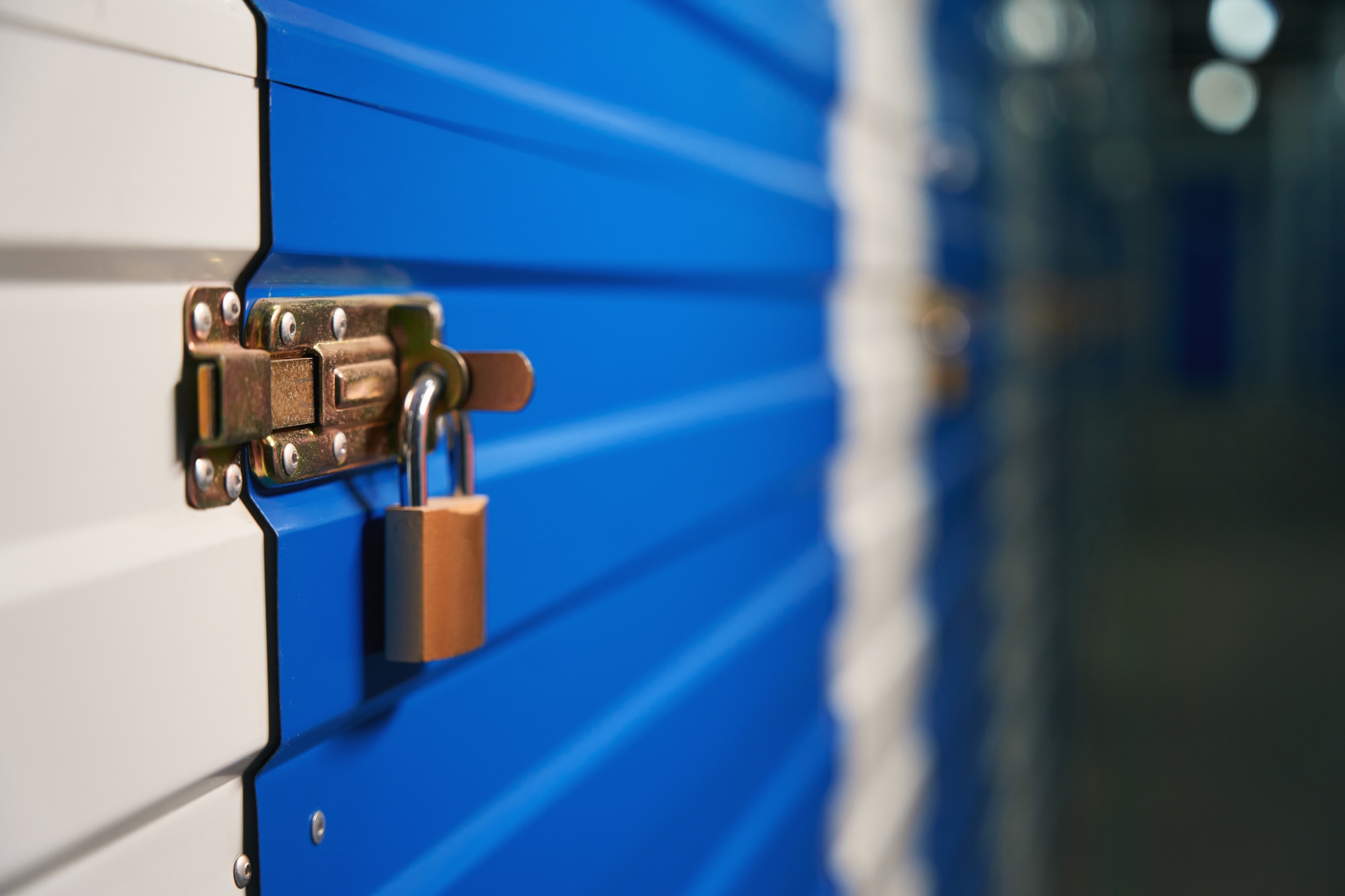
A standard open-shackle padlock is significantly easier to defeat than a disc lock or a shrouded padlock with a protected shackle. Hardware store padlocks are a common weak point at storage units because they are inexpensive and widely used, which means anyone looking for an easy target knows exactly how to defeat them quickly. A quality disc lock costs between fifteen and thirty dollars, and closes that gap meaningfully.If you are unsure what type of lock to use, ask the facility staff when you rent. Most storage operations have a preferred lock type and can point you in the right direction.
Do Not Share Your Access Credentials
Your gate code or access credential is tied to your account. Sharing it with someone who is not listed on your rental agreement creates an access record that may not reflect who was actually on the property at a given time. Keep your credentials personal and update the facility if your access needs change.
Report Anything That Looks Wrong
If you visit your unit and notice something unusual, such as a door that is not closing correctly, a lock that has been tampered with, or damage to the surrounding area, report it to the facility immediately. Do not assume it is unrelated to your unit. Early reporting allows the facility to investigate before a situation escalates and gives you a documented record that you noticed and flagged the issue.
How Safe Storage NV Approaches Security Across Its Nevada Locations
Safe Storage NV operates three self-storage facilities in Northern Nevada: Fernley, Silver Springs, and Carson City. Each location is built around the same security baseline of gated access, surveillance cameras, and perimeter lighting that the features above describe.The Silver Springs facility at 8715 Scenic Ave serves renters across Lyon County and includes RV and boat storage in addition to standard unit rentals. The same security infrastructure that covers indoor units also applies to the vehicle storage areas at that location.The Carson City location at 4749 US-50 serves the capital area with convenient highway access, and RV and boat storage are available there as well. The Fernley facility at 175 Mull Lane rounds out the network for renters in the western Lyon County and Churchill County corridors.If you are evaluating Safe Storage NV for any of these locations, you can apply the same checklist from this guide. Ask about the access system, ask about camera coverage, visit after dark if access hours matter to you, and inspect the perimeter when you tour. A facility that takes security seriously will be able to answer your questions in specific terms.You can check current availability across all three locations by visiting the Safe Storage NV locations page or the individual facility pages linked above.
Frequently Asked Questions About Storage Unit Security
What type of lock should I use on a storage unit?
A disc lock or a shrouded padlock with a protected shackle offers significantly better resistance to cutting and prying than a standard open-shackle padlock. If your storage facility sells locks on site, ask what type they recommend and why.
Is gated access enough to keep a storage facility secure?
Gated access is an important layer of security, but it works best when combined with individual credentials, surveillance cameras, and adequate lighting. A gate alone does not create a secure facility if the other elements are absent.
What should I do if I notice damage to my unit or the surrounding area?
Report it to the facility immediately and document what you observed with photos and a written note of the date and time. Contact the facility team, file a report with local law enforcement if there is evidence of a break-in, and notify your renters' insurance provider if you carry coverage on your stored items.
Does Safe Storage NV have cameras at all three locations?
Yes. Surveillance cameras are part of the security infrastructure at the Fernley, Silver Springs, and Carson City facilities. Visit the individual location pages or contact the Safe Storage NV team with specific questions about any location.
Can I visit a facility before I rent?
Yes. Visiting in person before you sign is one of the most useful things you can do. Walk the property, look at the gate system, check the lighting, and speak with whoever is managing the location. A facility that welcomes that kind of visit is a facility that is confident in what you will find.
Rent with Your Eyes Open, Not Your Fingers Crossed
The checklist in this guide is not complicated. Gated access with individual credentials. Cameras covering the full property, not just the entry sign. Perimeter and aisle lighting you can actually see by. A well-maintained fence line. Management that answers direct questions with direct answers. A quality lock on your unit door. Those are the fundamentals, and any storage facility worth renting from should be able to confirm every one of them without hesitation.The renters who end up filing theft claims are rarely the ones who asked too many questions before they signed. They are almost always the ones who assumed a low monthly rate meant the operation was professional, or who did not think to visit after dark, or who did not realize that a shared gate code offers almost no meaningful access control. The information in this guide costs nothing to use and could prevent a loss that costs significantly more than that.Safe Storage NV operates three facilities in Northern Nevada, in Fernley, Silver Springs, and Carson City, and each one is built around the security baseline this guide describes. If you want to see what that looks like before you commit, show up in person, walk the property, and ask the questions. A facility that takes security seriously will welcome that kind of scrutiny.Find your nearest Safe Storage NV location and check what units are currently available. If you have specific questions about a facility's security setup or access procedures before you rent, reach out to the Safe Storage NV team and get a straight answer. That is exactly the kind of question a well-run storage operation should expect and be ready to answer.
Safe Storage NV - Helpful Articles and Tips